How to transform a commodity into a new category of high value-added products
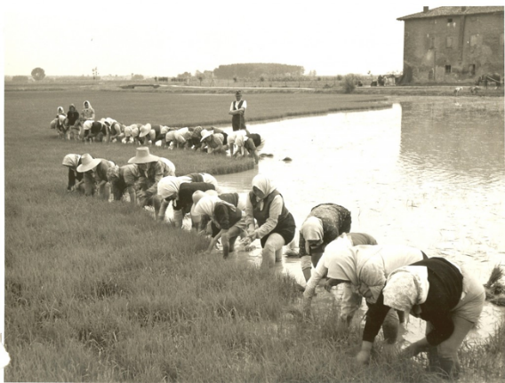
Italy is one of Europe’s leading rice producers. Its varieties represent an agricultural, gastronomic and cultural heritage built up over more than a century of experience.
In recent years, however, the market has changed profoundly.
International competition has intensified. Profit margins have narrowed. Consumers are demanding more innovative, more sustainable food products that offer greater added value.
Against this backdrop, one question inevitably arises.
Is it still enough simply to produce excellent rice?
Or has the time come to create new products that allow us to make the most of it?
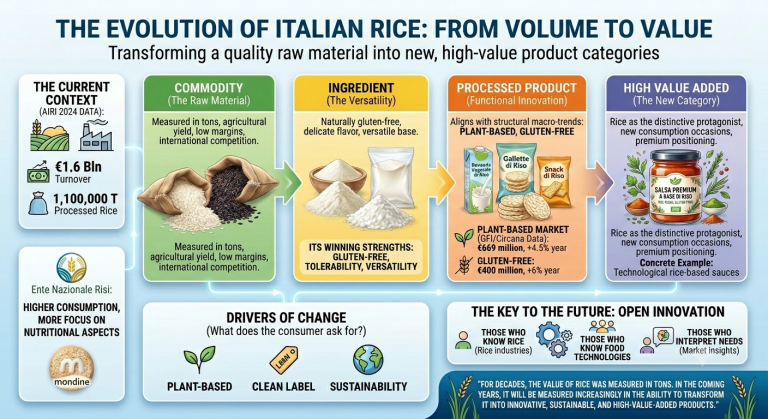
AIRI: Industry figures for 2024 – €1.6 billion – Turnover – 1,100,000 tonnes – Processed rice
Per capita rice consumption stands at around 7 kg.
From volume to value
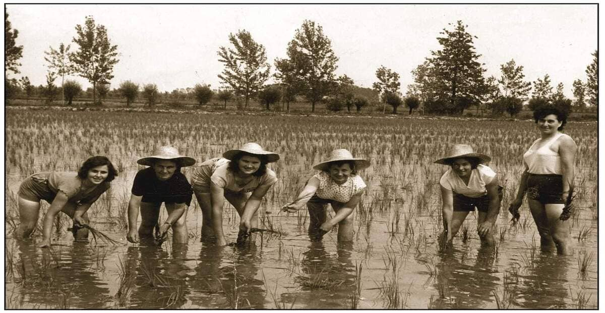
For decades, the success of the rice industry has been measured primarily in terms of tonnes produced, crop yields and exports.
Today, these indicators remain fundamental, but they are no longer sufficient.
Growth increasingly depends on the ability to transform an excellent raw material into innovative food products capable of generating significantly greater economic value.
This is the same evolution that many other agri-food sectors have undergone.
Milk is no longer just milk. It has become yoghurt, desserts, functional drinks and high-value ingredients.
The tomato is not just a raw material. It has become a family of products aimed at a wide variety of markets.
Rice, too, can follow this path.
Consumer behaviour has already changed
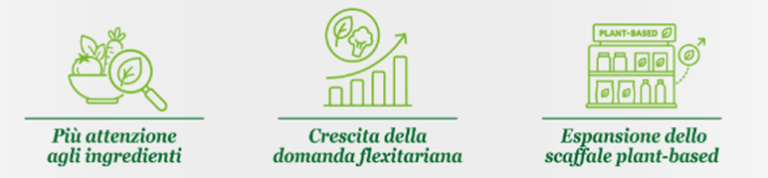
In recent years, consumers have radically altered their eating habits.
There is growing interest in products that are:
- plant-based;
- organic;
- naturally gluten-free;
- made with simple ingredients;
- sustainable;
- suited to new dietary lifestyles.
This evolution is not merely a passing fad.
It represents a structural transformation of the food market.
Companies that are able to capitalise on this trend will have new opportunities for growth.
“The Italian plant-based market reached €669 million in 2025, with annual growth of 4.5 per cent by value and 5.8 per cent by volume.
This is according to the Good Food Institute’s (Gfi) report on the Italian plant-based food retail market 2023–2025, based on data from Circana.”

Rice has unique characteristics
Few ingredients can boast the qualities of rice.
It is naturally gluten-free.
It has a delicate flavour.
It is extremely versatile.
It is well tolerated by a wide range of consumers.
It can be easily incorporated into numerous food preparations.
For these reasons, rice is an ideal base for developing new food categories.
Yet its potential remains largely untapped.
“A booming market
The gluten-free sector is enjoying a golden age. Globally, the market is set to grow rapidly in the coming years, and the figures for Italy are equally impressive: a total value of around 400 million euros, with an estimated annual growth rate of 6 per cent until 2025. Part of this boom is linked to the rise in diagnoses of coeliac disease, but an equally significant factor is consumers’ conscious choice to include gluten-free products in their diet for their wellbeing and digestion.”
Beyond the plate of rice
When it comes to innovation, rice is often associated with flours, plant-based drinks or functional ingredients.
However, there is an opportunity that remains largely untapped.
Transforming rice into the key ingredient in finished products with high added value.
Not simply an ingredient.
But the defining feature of the product.
It is a shift in perspective.
And it is precisely this shift in perspective that can give rise to new opportunities for the entire supply chain.
“It’s good for you, it tastes good, and it’s ours: rice is once again taking centre stage on Italian dining tables. This is what emerges from the latest survey by the National Observatory on Rice Consumption in Italy, which paints a picture of a sector in full growth: higher consumption, greater focus on nutritional aspects, but also a long way to go in terms of raising awareness of the value and quality of Italian rice.”
The research was commissioned by the National Rice Authority
A new market category
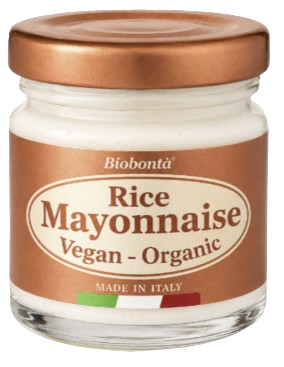
Rice-based sauces are a concrete example of this development.
They are not simply a variation on traditional mayonnaise.
They represent a technological platform that enables the development of innovative, organic, plant-based and naturally gluten-free products, intended for both the retail and food service sectors.
The value lies not only in the recipe.
It lies in the possibility of creating a new market category.
Every new category generates new consumption opportunities, new shelf space and new commercial opportunities.
An opportunity for the Italian rice industry
The rice industry possesses extraordinary expertise in the production, selection and promotion of rice.
Today, it can take a further step forward.
It can also take a leading role in the development of processed foods with high added value.
This means expanding its product portfolio.
Entering new categories.
Strengthening existing brands.
Creating new opportunities in the private label sector.
Tapping into new international markets.
Not replacing traditional rice.
Enhancing its value.
A vision open to collaboration
Innovation rarely stems from a single company.
It arises from the coming together of different areas of expertise.
Those who understand rice.
Those who understand food technology.
Those who interpret new consumer needs.
Only by bringing these areas of expertise together is it possible to create new product categories capable of strengthening the entire supply chain.
The future of rice is being built today
Italian rice is one of the jewels in the crown of our agri-food sector.
The challenge in the coming years will not simply be to produce more of it.
It will be to create greater value from it.
Every innovation capable of transforming rice into new food products helps to strengthen the entire supply chain, expand opportunities for businesses and consolidate the role of ‘Made in Italy’ on international markets.
For decades, the value of rice has been measured in tonnes.
In the coming years, it will increasingly be measured by our ability to transform it into innovative, sustainable products with high added value.
Perhaps the future of Italian rice lies not just in growing it.
Perhaps it also lies in imagining all that can still be created thanks to rice.
Frequently asked questions about rice-based sauces and the promotion of Italian rice
What is a rice-based sauce?
A rice-based sauce is a condiment in which rice is one of the key ingredients of the recipe and contributes to the product’s structure, texture and nutritional profile. Depending on the formulation, it can be developed as an alternative to traditional sauces containing eggs or other ingredients of animal origin.
Why use rice to make a sauce?
Rice has properties that are particularly appealing to the food industry. It has a delicate flavour, is naturally gluten-free, is easily digestible and lends itself to the development of innovative products aimed at consumers seeking plant-based, organic foods made with simple ingredients.
What advantages does rice offer compared to other plant-based ingredients?
Rice has a neutral flavour profile, good processing versatility and is widely accepted by consumers. It is also a widely available raw material in Italy, with a well-established supply chain that is recognised internationally.
Are rice-based sauces suitable for plant-based products?
Yes. Sauces developed using rice can be formulated without ingredients of animal origin and represent a solution that is in line with the growing demand for plant-based, vegan and sustainable foods.
Are rice-based sauces naturally gluten-free?
Rice is naturally gluten-free. Of course, the finished product must be developed and manufactured in such a way as to ensure there is no contamination and to comply with current regulations in order to be marketed as gluten-free.
What commercial applications might rice-based sauces have?
There are numerous applications. They can be supplied to supermarkets, the food service sector, restaurants, delicatessens, ready-meal manufacturers and private-label schemes. They are available in various formats, from jars and doypacks to single-serve sachets and bag-in-box packaging.
Why might rice-based sauces represent a new market category?
Because they do not simply replace a traditional sauce. They introduce a different way of making the most of rice, transforming it from an agricultural raw material into the key ingredient of an innovative food product. This makes it possible to create greater added value throughout the supply chain.
What opportunities do they offer the rice industry?
The rice industry can expand its product range by entering new market segments, developing own-brand products, undertaking private-label projects and diversifying its business with processed foods offering high added value.
Can rice-based sauces be produced under private label?
Yes. The technology platform can be customised to develop recipes tailored to the brands of the rice industry, the retail sector and brand owners, whilst maintaining high standards of quality and production.
What does the future hold for rice in food applications?
In addition to its traditional uses, rice offers vast potential for the development of innovative foods. Condiments, sauces, functional ingredients and new plant-based products represent a natural evolution for an industry seeking to increase the added value of its products.
Key points to remember
- Rice can form the basis of a new category of food products.
- Rice-based sauces represent an opportunity to increase the added value of the supply chain.
- Plant-based, organic and gluten-free products are among the most dynamic segments of the food market.
- Rice producers can develop new products under their own brand or as private label products.
- Innovation does not replace traditional rice: it broadens the scope for its use and adds value to it.