Introduction: Where does the idea that “more water is better” come from?
For years, health communications have repeated the slogan “drinking plenty is good for you,” almost turning it into a daily obligation. Advertisements, influencers, and popular myths have reinforced the idea that the more water you drink, the more you “purify” yourself. The message seems convincing, but it oversimplifies how our bodies work.
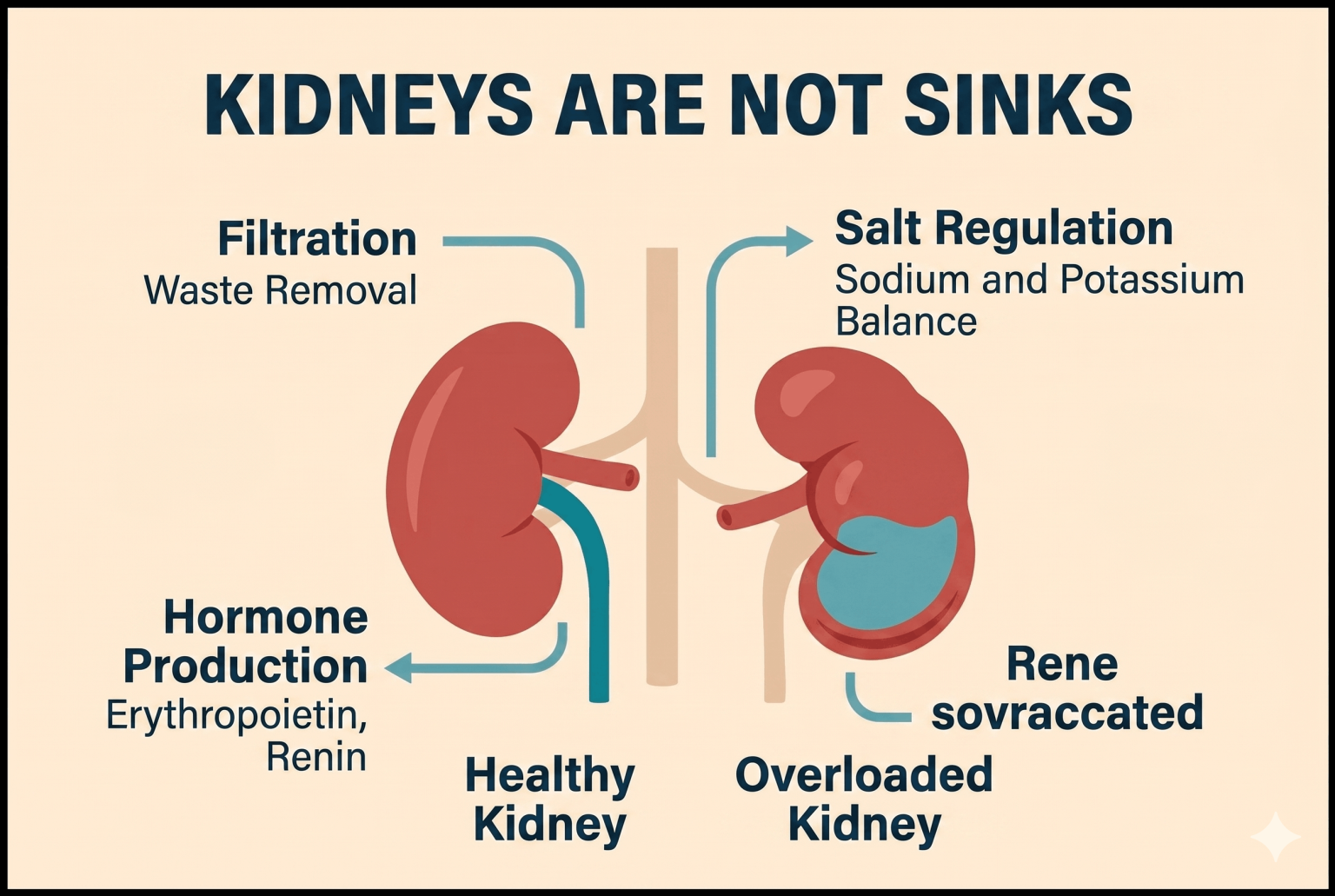
The body doesn’t function like a sink that needs to be constantly rinsed: the kidneys filter blood very efficiently, but they have a clear physiological limit—about 0.8–1 liter per hour. Regularly exceeding this limit risks diluting sodium in the blood and generating imbalances called hyponatremia, also described in scientific literature analyzing the risks of overhydration.
Authorities such as EFSA, the World Health Organization (WHO), and the Mayo Clinic remind us that water needs vary from person to person and that the only truly universal indicator remains thirst. There’s no need to overdo it; balance is key.
Why do we tend to drink too much?
Many widespread beliefs lead to excess:
Fixed numbers (the classic “three liters a day”) ignore climate, diet, and physical activity.
The obsession with detox leads to the belief that water eliminates excess “toxins”: in reality, it’s the kidneys and liver that do this, not the liters consumed.
Hope for aesthetic benefits: perfect skin, constant energy, weight loss… these are true only within sensible quantities.
The result is that many people drink “as a rule,” not because their body demands it.
o lo chieda.

Why Insisting on Drinking Excessively Is Risky
When the water intake exceeds what the kidneys can filter, a specific thing happens:
the fluids dilute the sodium in the blood, altering the electrolyte balance.
This leads to:
very frequent urination and almost clear urine
bloating and a feeling of heaviness
headache and nausea
unexplained fatigue
in more severe cases, mental confusion and dizziness
Drinking large quantities in a short time is particularly risky, because the kidneys cannot accelerate beyond their natural limit.
What damage can drinking too much water cause?
1) Overhydration and Hyponatremia
When sodium drops below certain levels, cells retain water and swell. If this happens in the brain, the symptoms can become severe.
2) Kidney Stress
The kidneys are designed for balance, not to dispose of an excessive and constant flow of fluids.
3) Gastrointestinal disorders
Excess water can accelerate intestinal transit and lead to loose stools or diarrhea, as noted in the attached document.
4) Dilution of gastric juices
Too much water close to meals can worsen digestion.
Common mistakes to avoid
Drinking large quantities at once “to recover.”
Following general recommendations, ignoring weight, climate, and physical activity.
For athletes: drink only water without mineral salts.
Thinking that frequent urination is always a good sign.

Do we really need to drink?
The EFSA guidelines indicate:
2 L/woman,
2.5 L/man,
including liquids found in food.
So those who eat a lot of fruit and vegetables often need less water than they think.
A practical method: 30–35 ml per kg.
And an even simpler indicator: light yellow urine = adequate hydration.
Increasing fluid intake is only necessary in cases of:
severe heat
intense physical activity
fever, heavy sweating
high-protein diet
The ideal balance
Water is good for you, but not in infinite quantities. The body is already designed to tell us when it’s time to drink: we just need to listen to it. Distributing fluids throughout the day, not overdoing it, and not forcing it protects the kidneys and maintains a stable electrolyte balance.

FAQ
1) How do I know if I’m drinking too much?
Clear urine, bloating, headaches, and fatigue are common signs. If they appear after days of “forced hydration,” it’s likely that the body is asking for a break.
2) Can you overhydrate even with healthy kidneys?
Yes. The kidneys have a physical filtration limit that can’t be exceeded, even if they’re perfectly healthy.
3) Does drinking lots of water really help you lose weight?
It only helps indirectly: it can increase the feeling of satiety and improve digestion. Drinking more than what’s needed provides no benefit.