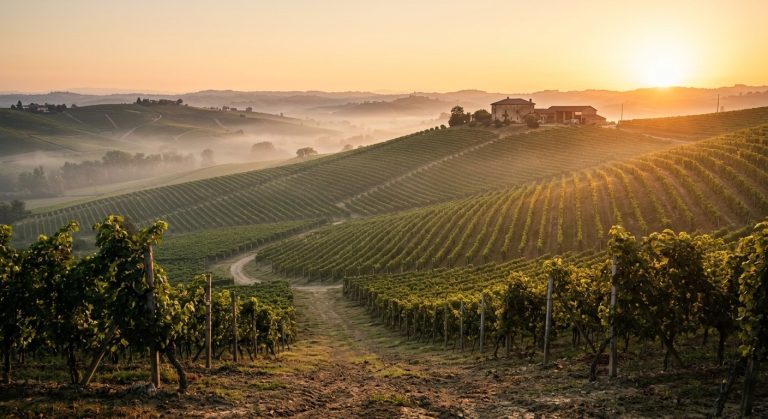
There is a scent that has always had two facets for me. October, the courtyard at home, the crisp morning air: on the one hand, the sweet, musky scent of freshly picked Moscato grapes; on the other, the rich, slightly tangy scent of ripe tomatoes, ready to be made into preserves for the winter. In the Asti area, the grape harvest and the tomato harvest take place almost simultaneously, in the same courtyards, sometimes in the very same houses. I grew up amidst this dual season, without realising that one day I would turn it into a career. In fact, it was an idea that, as far as we know, no one had ever thought of before.
Roots: a childhood spent among vineyards and ‘butaline’
My father used to buy wine grapes for Pippione, in the Asti area: every autumn, baskets full of grapes would be carried from the vineyards to the cellars, in a constant coming and going that marked the busiest weeks of the year. At the same time, in the courtyard, my mother and my grandmother Ernesta would prepare tomato preserves using San Marzano tomatoes, which in Piedmont are called ‘le butaline’: tomatoes cut up, filled by hand, boiled in a large pot, with lids tied down with string. A ritual that was repeated exactly the same way every year, passed down without needing to be explained.
Two different processes, the same soil, the same season, often the same garden — and yet, for decades, they remained two parallel worlds. The wine ended up in a glass. The tomato ended up on a plate. Back then, it would never have occurred to anyone to bring them together in the same jar.
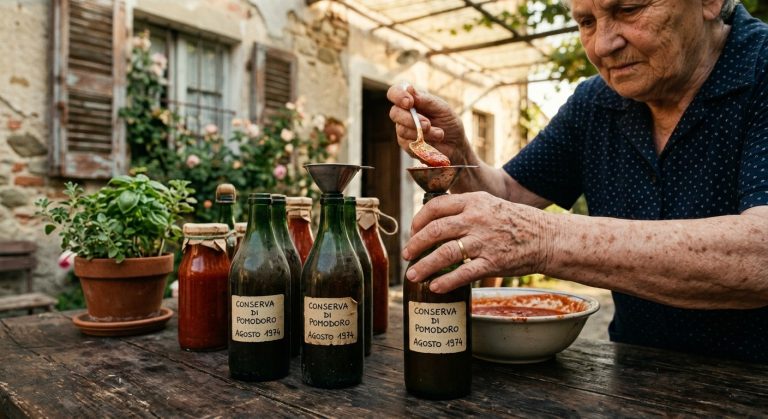
Wine and tomatoes: two stars that had (almost) never met
In Italian culinary tradition, wine and tomatoes are two major players who rarely share the limelight. It is curious, because Piedmont is the region that has made them both world-famous, albeit in different ways. On the one hand, there are the great aromatic grape varieties such as Moscato, which, according to historical sources, has been cultivated in the Canelli area since the 14th century and whose production methods were codified as early as the 17th century by the court jeweller Giovanni Battista Croce. On the other, tinned tomatoes: it was a Piedmontese man, Francesco Cirio, born in Nizza Monferrato — right in the Asti area — in 1836, who founded in Turin in 1856 what would become the Italian tinned food industry, transforming on an industrial scale a practice that had already been carried out for generations in homes, such as that of my grandmother Ernesta, using ‘butaline’ jars.
Two stories that began just a few kilometres apart, in the same province, and which have run their course for a century and a half without ever really intersecting. All that was needed was for someone to decide to bring them together in a single jar.
How Moscato d’Asti DOCG Ketchup is made
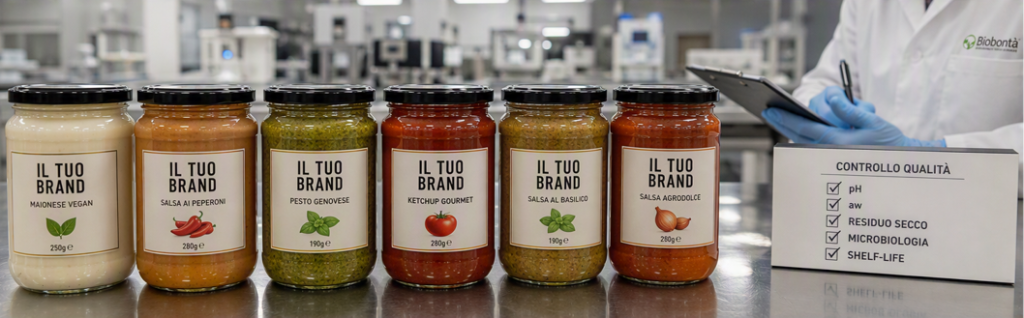
That someone, with a touch of recklessness and well over thirty years’ experience in creating sauces, was Biobontà. Our mission, right from the start, has been to blend the complex, aromatic notes of Italy’s finest grape varieties and wines into the most classic of condiments, creating fresh flavours capable of complementing new culinary experiments in an ever-evolving gastronomic world. After trialling dozens and dozens of sauces, the next question in Piedmont was almost inevitable: why not wine?
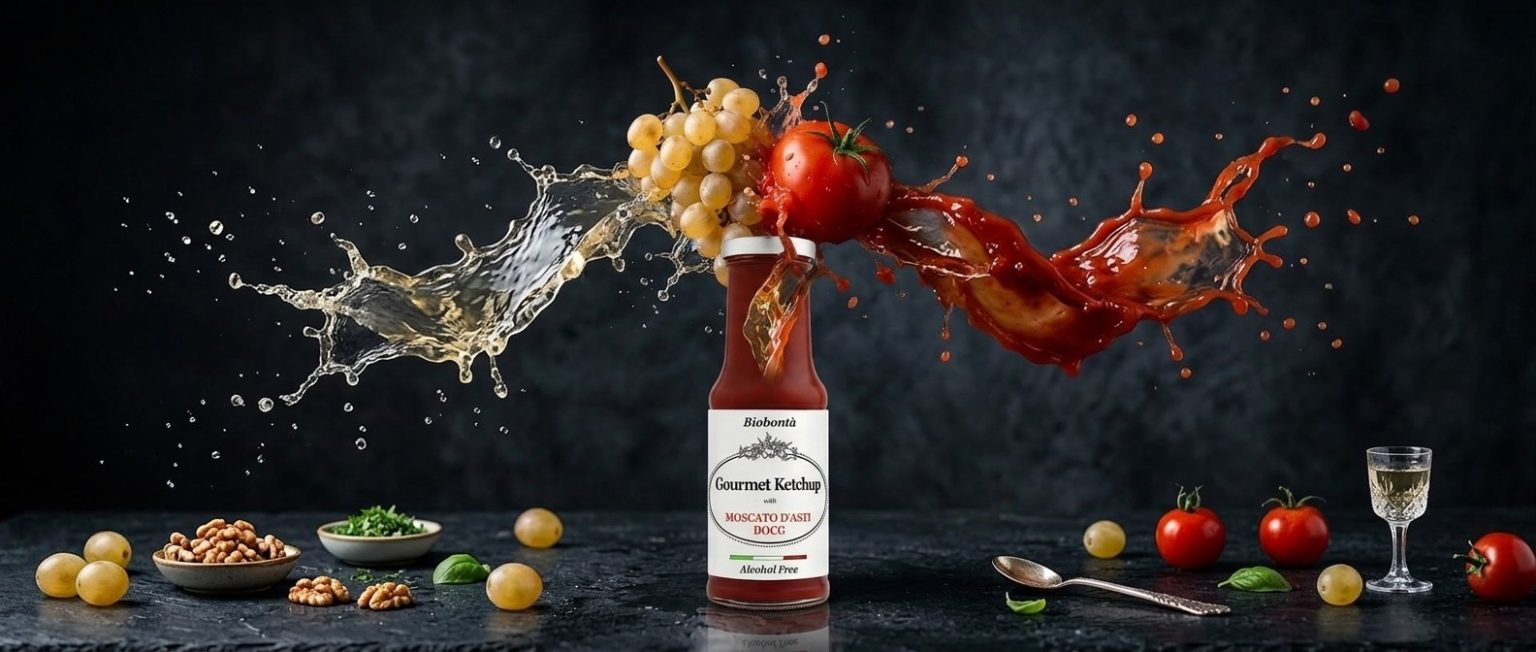
That question, combined with a gourmet Moscato d’Asti sauce already popular for its pairings with cheeses and aperitifs, led to the next step: a genuine gourmet ketchup, designed from the outset with international markets in mind. Not a local niche product, but a condiment with the ambition of bringing the king of Piedmont’s aromatic wines directly to the plate, and not just to the glass — as far as we know, the world’s first ketchup made with Moscato d’Asti DOCG.
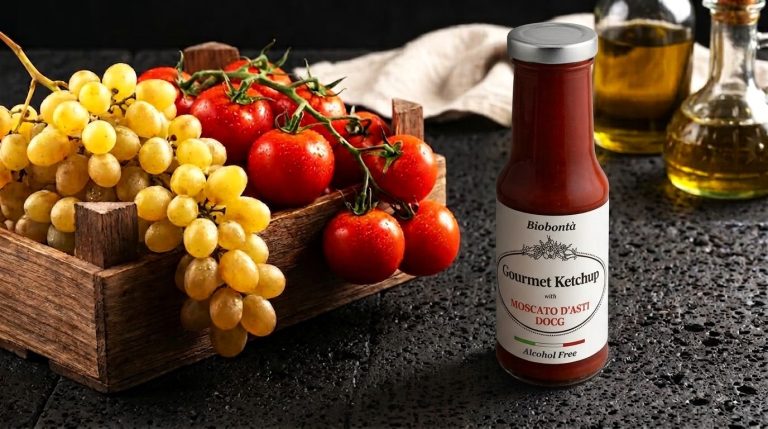
Technical innovation: all the flavour, no alcohol
The technical challenge was no small feat: to capture the full aromatic profile and fruity notes of Moscato d’Asti DOCG — its floral hints of acacia and wisteria, herbs such as sage, white fruit and honey — whilst completely eliminating the alcohol content. The result is a condiment that captures the wine’s full character, without a trace of alcohol:
- Alcohol-free: all the aroma of the wine, without alcohol, making it truly suitable for everyone
- Clean label: 100% natural, with no colourings or preservatives
- Organic (with the exception of the Moscato d’Asti DOCG), naturally gluten-free and vegan
The result is a product designed to be inclusive by definition: suitable for those who do not drink alcohol by choice, due to their age or personal beliefs, without compromising on a complex and recognisable flavour profile.
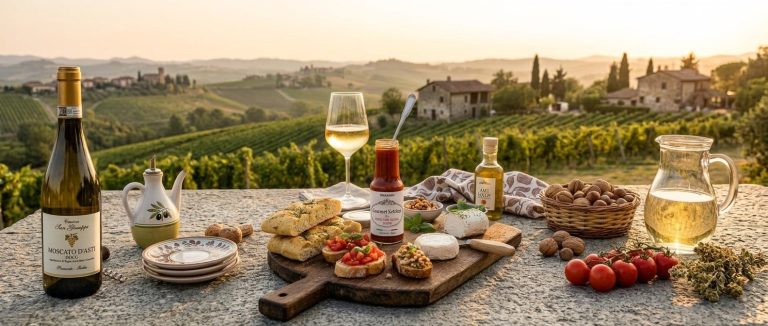
Why now, of all times: the (real) boom in the alcohol-free world
It is no coincidence that a project like this is emerging at this very moment. The market for non-alcoholic and low-alcohol drinks and products is no longer a seasonal phenomenon, but a genuine structural category: according to IWSR data compiled in the Good Culture 2026 report, global volumes in the segment are expected to grow by 37 per cent by 2027 compared with 2020, reaching around 4 per cent of global volumes — double the figure from ten years ago. The European non-alcoholic and low-alcohol market alone is now worth around 9 billion euros, and between 2022 and 2024 it attracted 60 million new consumers, with particularly strong interest among the 35–44 age group.
And what my grandmother Ernesta used to make out of necessity and tradition — a genuine, no-shortcuts, homemade product — is exactly what consumers all over the world are now seeking once again, coupled with a curiosity for a taste experience that smells of wine without having any of its effects.
In the kitchen: gourmet pairings that will amaze you
The gourmet Moscato d’Asti DOCG sauce, which forms the basis of our ketchup, offers a versatility rarely found in a classic condiment:
- Cheeses — goat’s cheese, robiola, fresh cheeses and blue cheeses: the Moscato provides a contrasting flavour and is perfect
- Sweet-and-sour appetisers — crostini, bruschetta, canapés and focaccia, where the wine’s aroma can be fully appreciated
- Fish and white meats — prawns, sashimi, carpaccio, poke bowls and hard-boiled eggs, for a very pleasant sweet-and-sour effect
- Desserts — cheesecake, yoghurt and ricotta, as a surprising gourmet topping
A variety of creative pairings designed specifically to impress guests, from the aperitif buffet right through to the end of the meal.
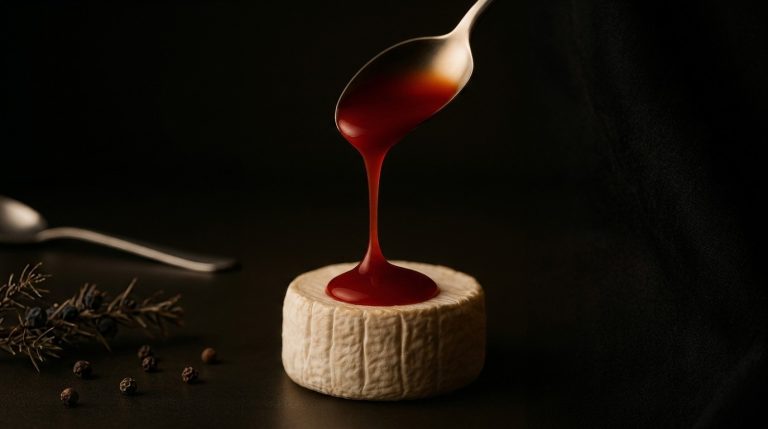
An idea born in Asti, designed for the world
Moscato d’Asti DOCG Ketchup was created with a specific aim in mind: to showcase Asti DOCG in new ways of enjoying the wine, complementing the glass, whilst also paving the way for foreign markets, starting with Northern Europe. Our vision remains the same as ever: to help people live better lives, bringing them the well-being and joy of eating well every day, with the courage to explore new sensations and taste experiences.
FAQ
Does the Moscato d’Asti DOCG Ketchup contain alcohol?
No. An innovative production process completely removes the alcohol content, whilst retaining the full aromatic profile and fruity notes of Moscato d’Asti DOCG.
Is it suitable for vegans, coeliacs and those with food intolerances?
Yes. It is a vegan product, naturally gluten-free, organic (with the exception of the Moscato d’Asti DOCG) and contains no added colourings or preservatives.
What does the Moscato d’Asti ketchup pair best with?
It is beautifully paired with fresh and blue cheeses, as an aperitif served on crostini and focaccia, with fish and white meats such as prawns, carpaccio and poke, and even with desserts such as cheesecake, yoghurt and ricotta.
What exactly is Moscato d’Asti DOCG?
It is an aromatic, sweet and naturally sparkling white wine, produced entirely from Moscato Bianco grapes in an area comprising 51 municipalities across the provinces of Asti, Cuneo and Alessandria, with a tradition of viticulture in the Canelli area dating back to the 14th century.
Where can you buy it or find out more?
For information on availability, distribution and partnerships, please email info@biobonta.com or visit www.biobonta.com.
When I taste this sauce, I can still almost see my grandmother Ernesta, her hands red with tomato, the ‘butaline’ lined up on the table in the courtyard. And I can see my father returning with baskets of grapes for Pippione. Two moments, the same land, the same season. It took a few decades – and quite a few experimental sauces – to realise that those two worlds could, at last, coexist in the same jar.
Claudio Fantolino